
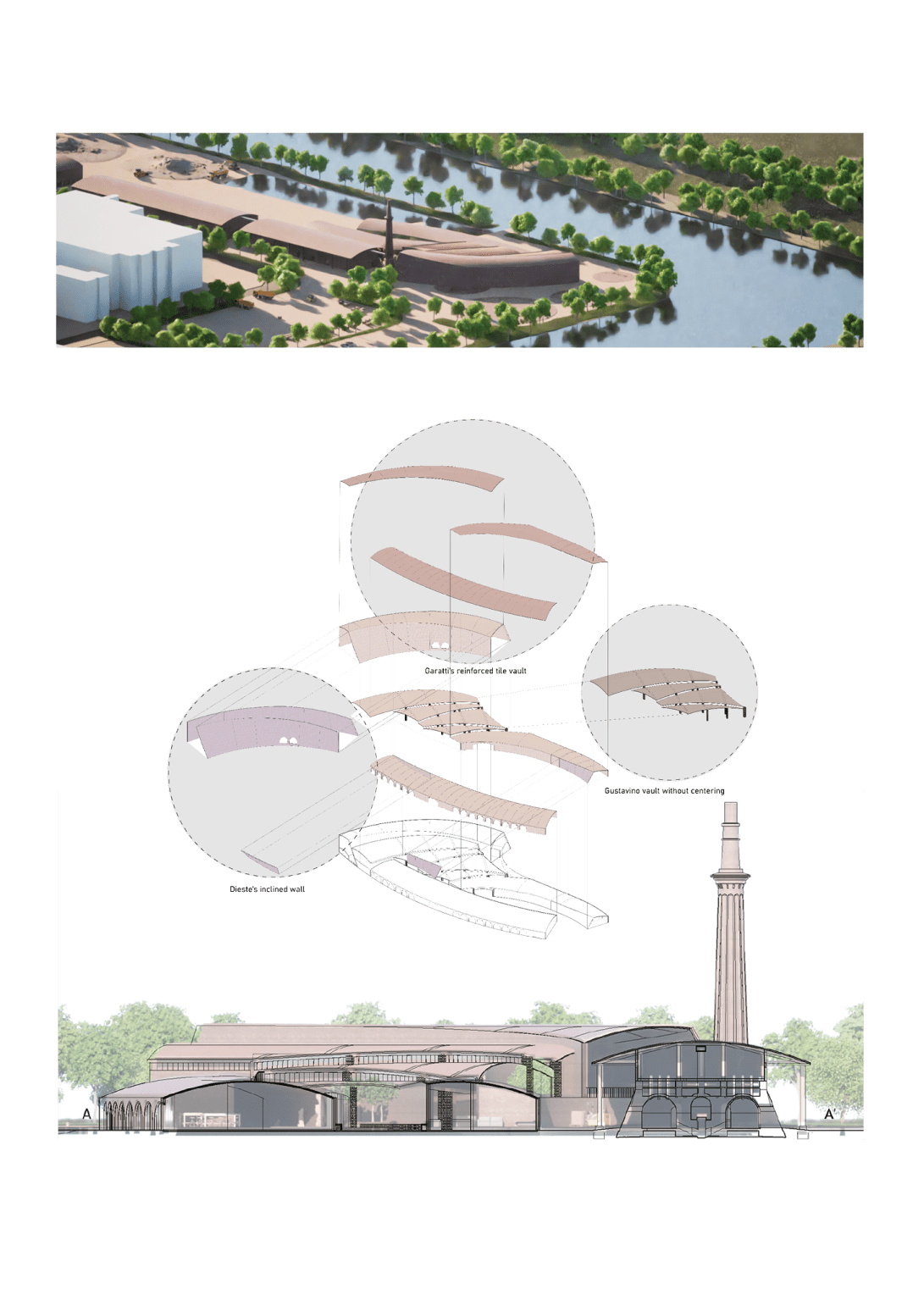

Tutor: Theo Lalis, Dora Sweijd
This project envisions Almere, a newly reclaimed city, which is considered a land of living tabula rasa gradually drawing its urbanity of Koolhaas’ masterplan; partitioned Almere in rigid compartments and functions leveraging Almere as a compensating city for Amsterdam. The problem Almere people find is repetitive residential blocks and lack of creative space to dwell, commonly commented on in Dutch urban planning, pervasive usages of controlled mass-produced budget bricks, and tedious repetition of city blocks.
In contrast, from the visit of Traditional Dutch brick manufacturers, Vogelensangh B.V., the richness of its manual production from the clay winning to ring-kiln for the variable outcome of brick, Almere can take advantage of their reclaimed clay ground not as a blank page of history but as the land as living history.
Rather than a prescripted pragmatic scheme of Almere, I look at the reclaimed land covered with clay as the historical identity of Almere and the Dutch brick bridging history and progression of the city through proposing an active brick facility as a public recreational program to learn, make and apply the masonry tectonic creatively in the form of living knowledge.
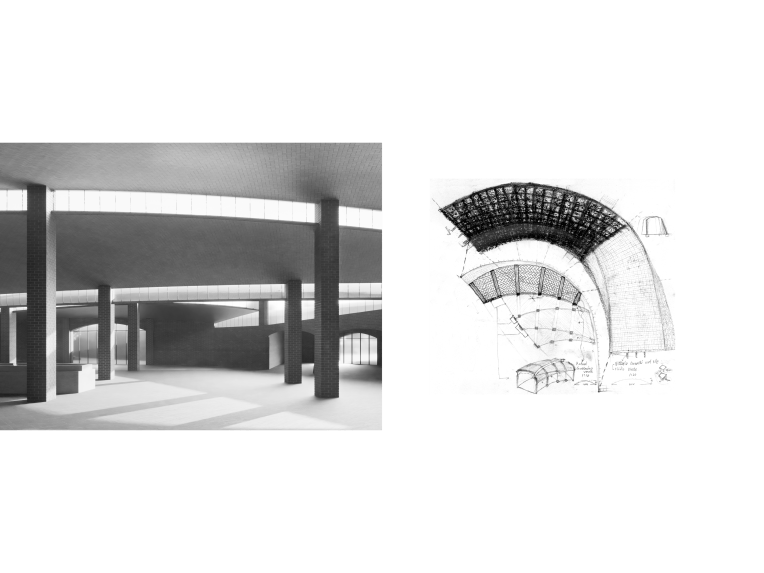
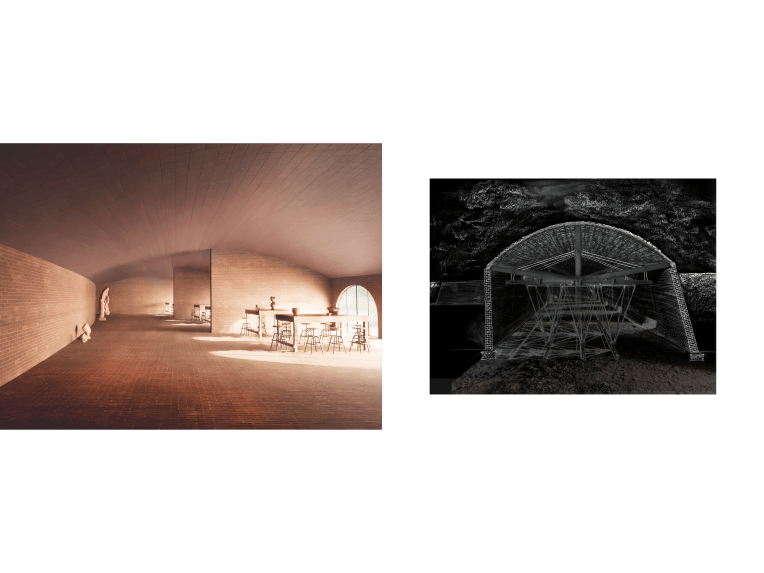
By carefully observing how certain buildings have influenced and reverberated through the tectonics of the masonry and how Dutch land has strived to perpetuate its inherent qualities for the brick production culture, my project examines the character of masonry masters tectonics to set the framework which is simple and applicable in building structures. Unleashing the potential of masonry bits of knowledge to a public program but the form from linear extension to parametricism
Larder of Generosity
By exploring how past architects engaged with the masonry tectonics, we can take their hand and let them guide us. We delve into their inherent qualities by seeking out generosity in the city, examining buildings that both perpetuate a language and spirit while simultaneously pushing back against banal conformity.
Due to the nature of its program as a brick factory, Gustavino, Lele, and Garatti’s building could hardly fall back on more conventional acts of generosity, such as public passage or open space, but instead compensates with its elevation, form, materiality and figure.
