

Fifth Year Project- Diploma 15
Tutor: Lucy Styles, Lawrence Barth
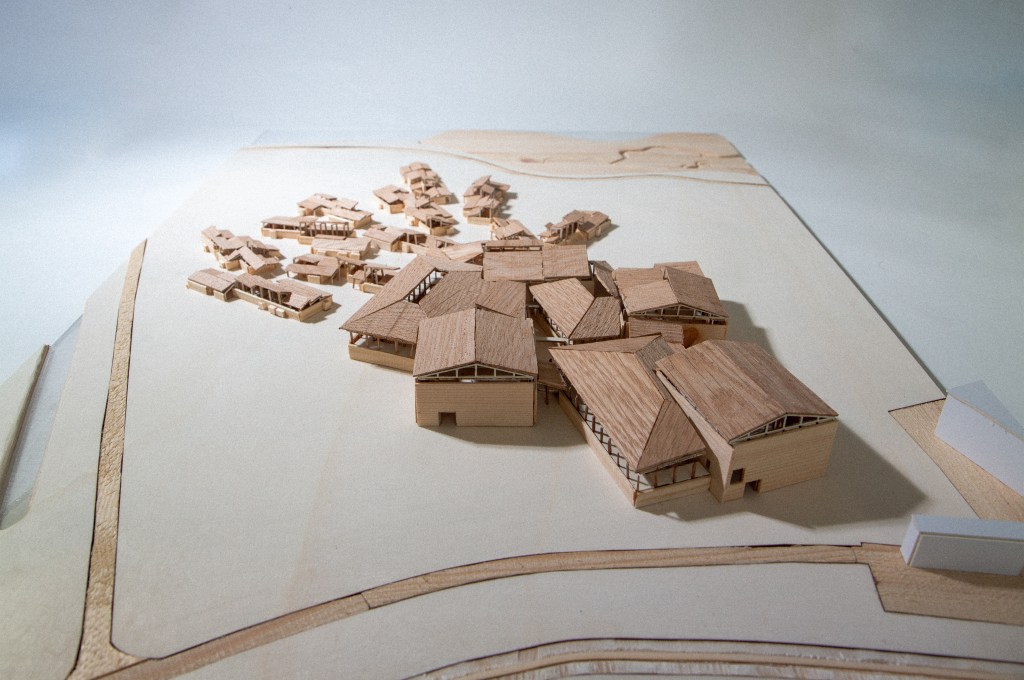
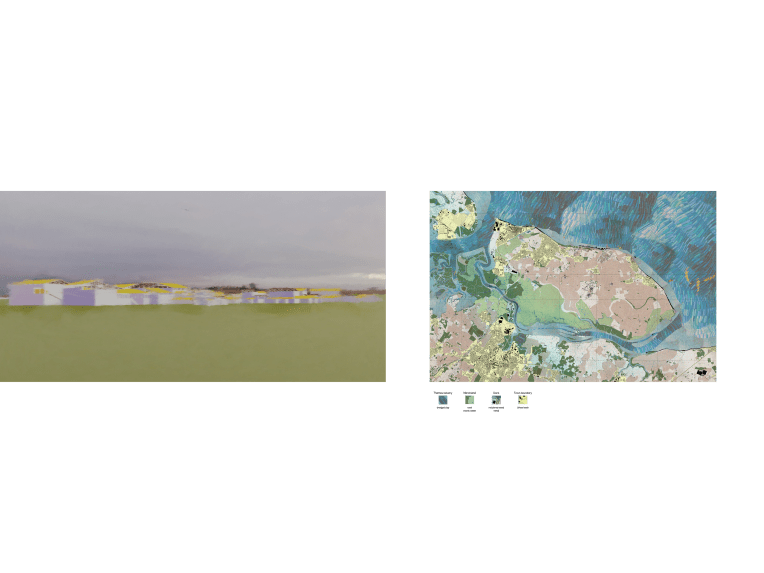
My site in Swale Borough, Kent, is a beacon of innovation. With the decline of local industries, high levels of unemployment and an alienation from the land itself, the area has become littered with waste. The proposal looks at how waste can be re-imagined as a resource, reorganising local waste streams–from industry, wetland and towns-to create sustainable building materials and offer re-skilling opportunities within the construction industry. The design introduces a compressed-waste block factory, education and training facilities and various housing types. This collective form proposes a shared ground by combining programmes within an architecture that embraces ambiguity, collisions, and intersections to address the rift between industry, land, and settlement patterns. It generates a sense of community around an alternative set of local cultural, industrial and geographical values.
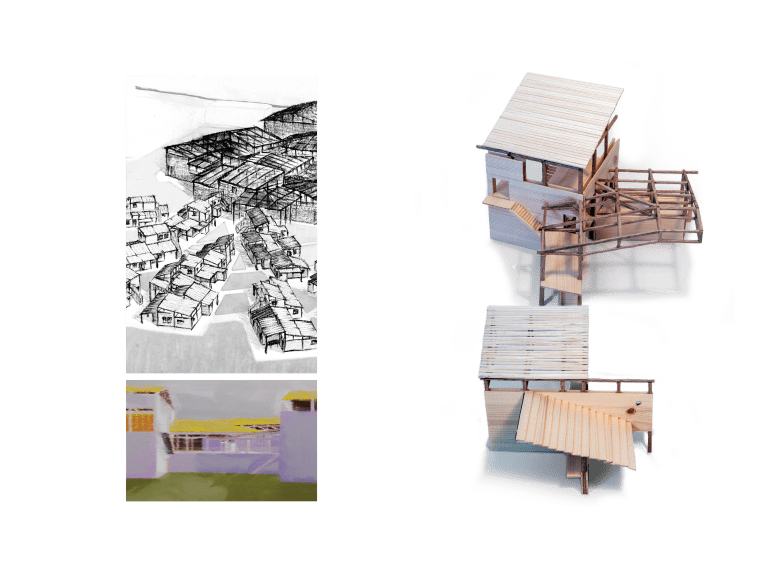
Collision model : Industrial, educational, residential program A simple form starts from triangles, rectangles and circles. However, complexity starts when multiple sets of items are put together and overlap. Like the Venn diagram, the overlapping moment brings the idea of beauty in its rhythm, composition and relationship of individual elements, enabling the engagement of logical control over the clusters and forms.
Residential. Cometting 99 homes Stretching from the industrial and educational blocks, residential buildings spread out, drawing radial collective form.Each flat unit touches the open green spaces on both sides, leading back to the quality of communal activation of industries for people to live with and learn from the mutual aid system. Empowering the post-industrial town is not from proposing a rigid form forcing the people to live in the way of an architect. Blueprints of living form can be drawn and built with the the residents’ hand towards their next generation of industrial living form.
